
The Friday Afternoon Work Order Autopsy is Canceled
Too Many Contractor Invoices Read Like Cold Case Files
It is 4:00 PM on a Friday. Someone in the office is cross-referencing three disconnected apps and a sprawling spreadsheet, trying to deduce what actually transpired on a job site last Tuesday. Who was there? Did the crew use forty feet of copper or sixty? Was that change order approved in a buried email thread, or is the company about to absorb the cost just to keep the project moving?
For a lot of contractors, work is billed from memory days later. Memory is a terrible place to store your profit margin.
Contractors do not lose money in one dramatic explosion. They lose it quietly in the handoffs. The spreadsheet is not the villain. The friction between siloed systems is. Most software on the market treats materials like an afterthought, leaving a massive blind spot in your operations. What if the job did not fall apart between the warehouse and the invoice?
Here is what it looks like when work, including every piece of inventory, is documented, approved, and invoiced within a single ecosystem as it happens. No forensics required.
The Digital Handshake
The job starts with the estimate. But when a client approves your bid, it should be more than a digital scribble on a PDF that easily gets lost in the shuffle of a busy project.
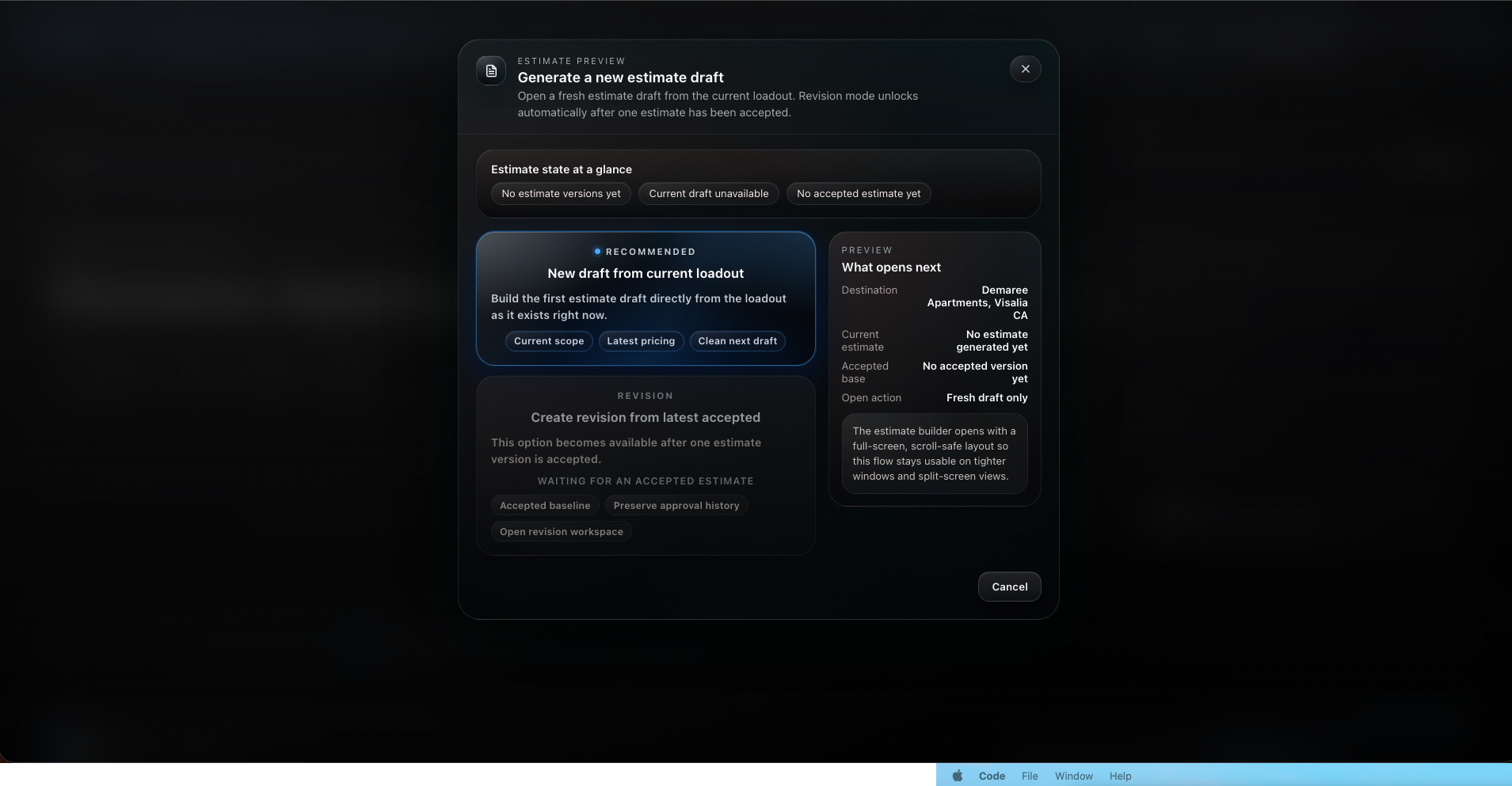
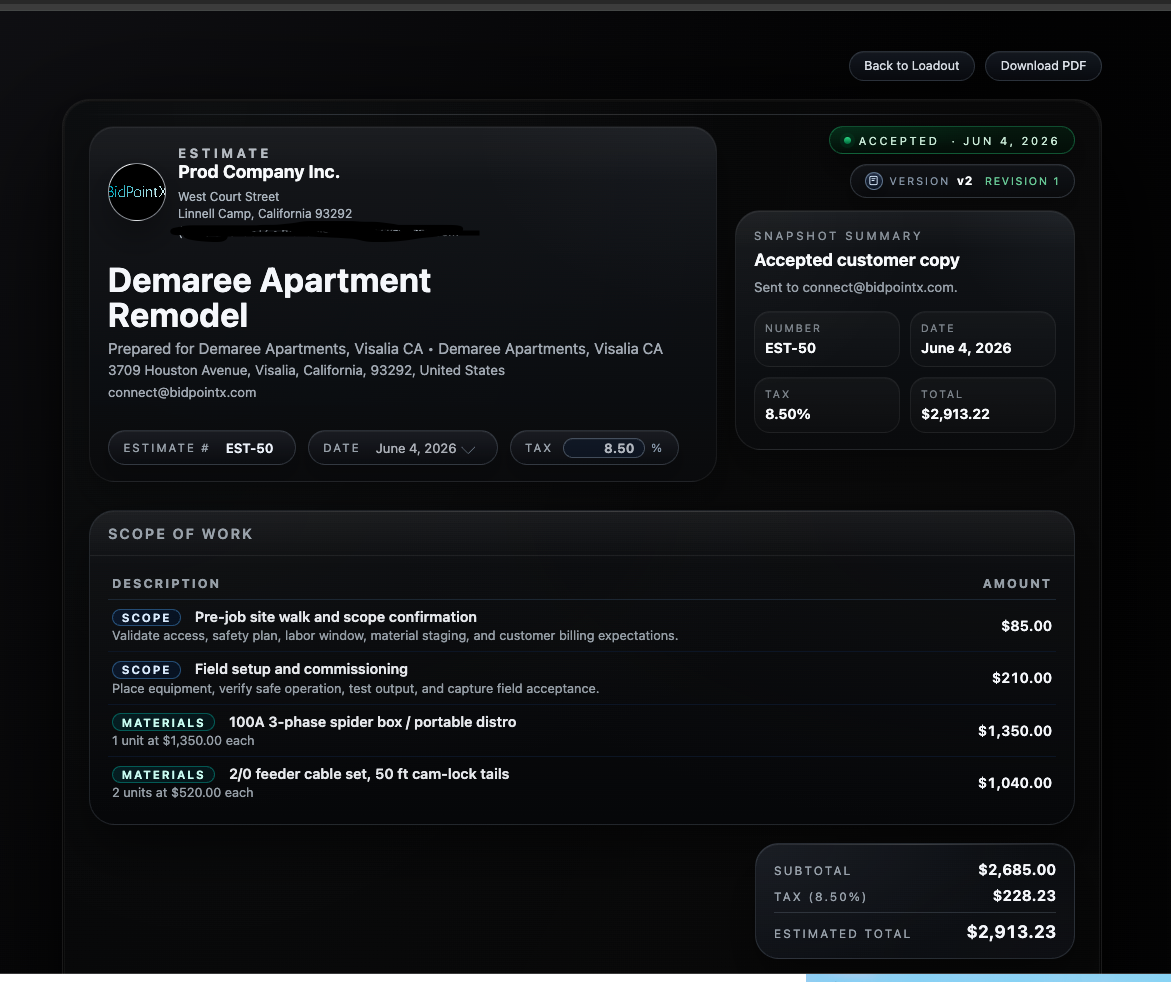
With BidPointX, the estimate is sent, reviewed, and signed securely. It creates a clear, shared record of what was agreed upon, protecting both you and the client from miscommunication down the line. It is not a digital napkin. It is a solid operational foundation. Once that signature hits, the job is real, and the materials are immediately accounted for.
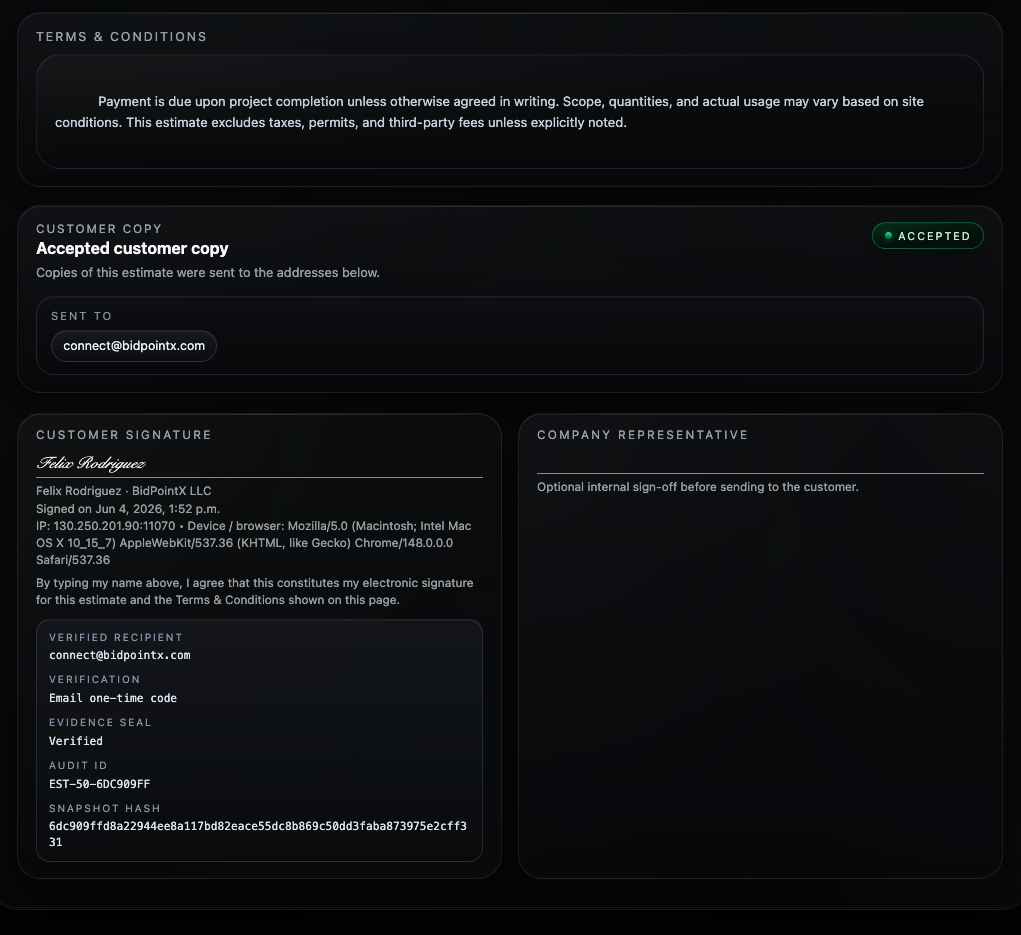
Your client’s signature verified and tracked with a unique Audit ID and one time verification code. Seamlessly integrated into your job(s) / projects.
The Loadout: Dressing the Job for Work
The clipboard had a good run, but it belongs in a museum. Once the estimate is locked, it flows directly into the loadout because your inventory is finally talking to your field operations.
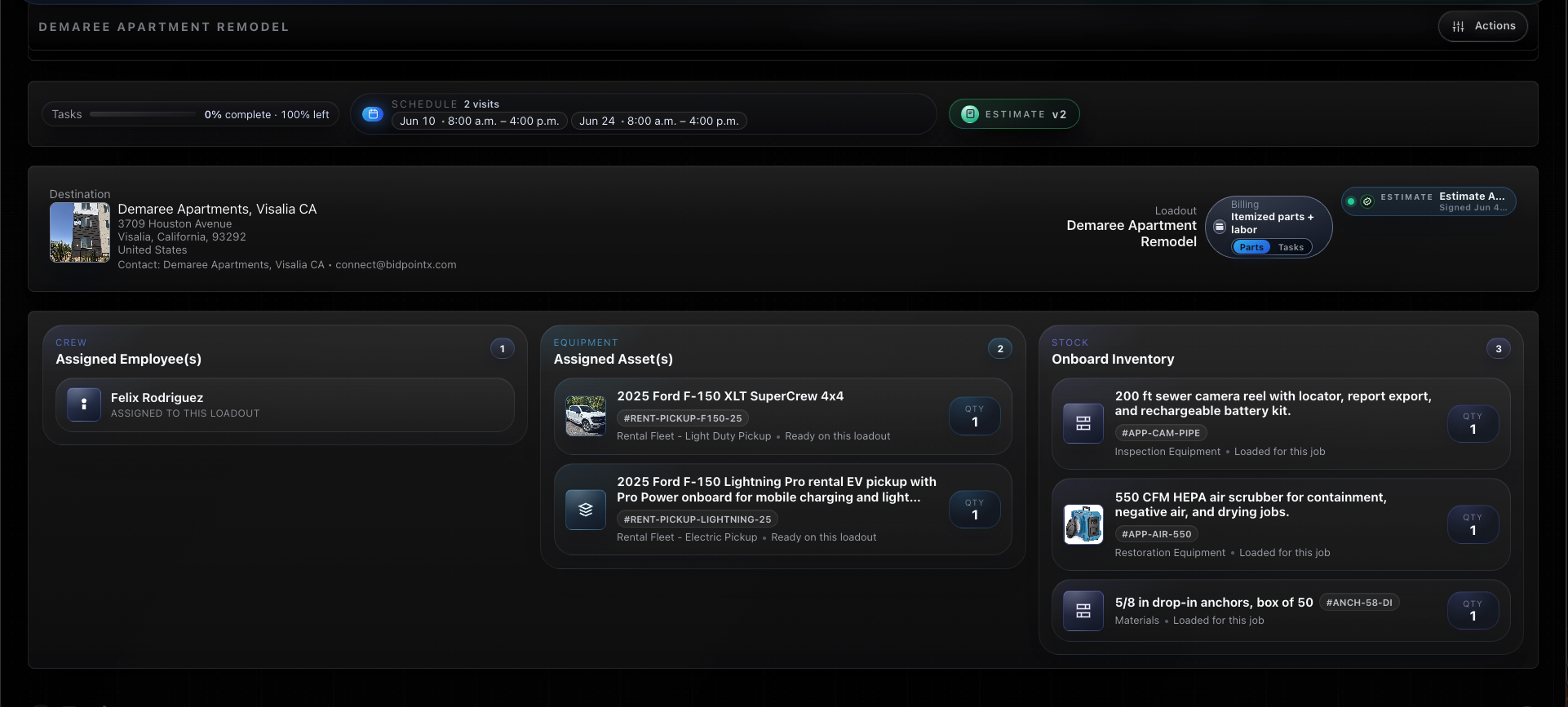
A loadout is not a static checklist. It is the live job package. It connects the assigned assets, the materials pulled from the warehouse, the routed destination, and the tasks required. The truck does not leave with hope as its operating system. It leaves with a precise, tracked inventory that perfectly matches the estimate everyone just agreed on.
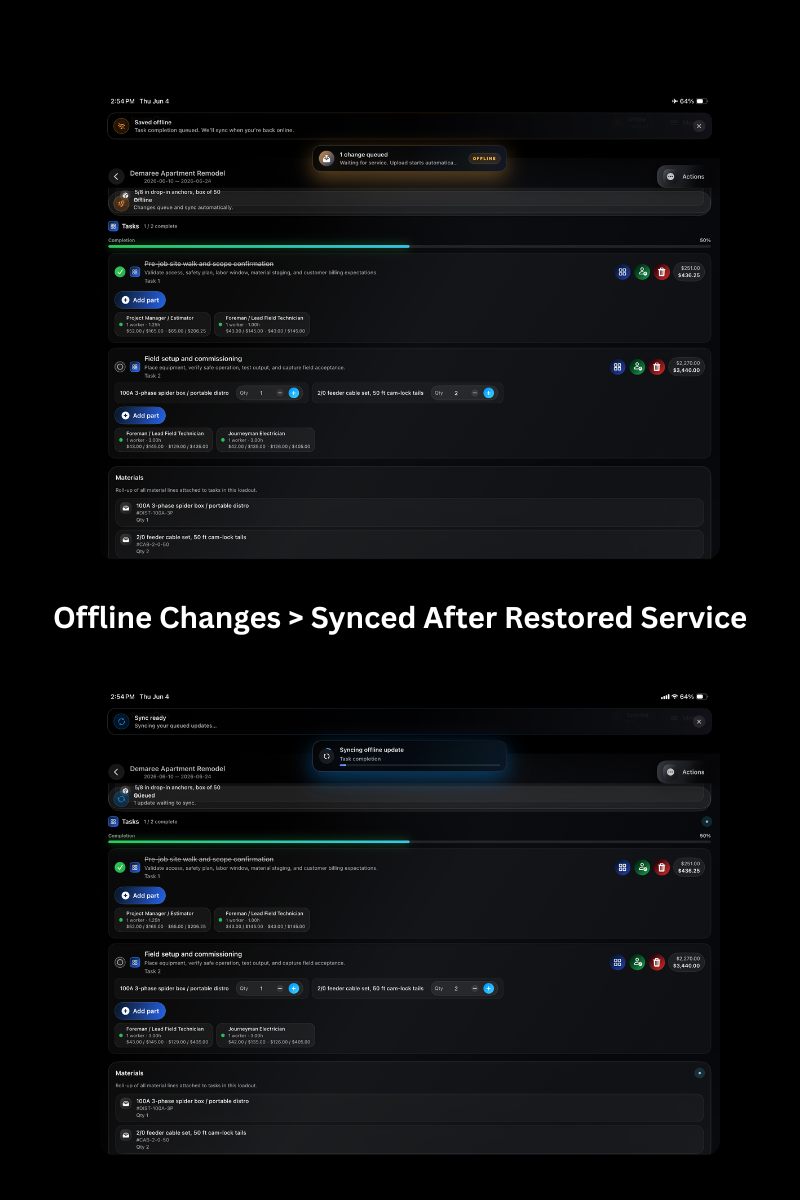
Execution and Field Truth
The warehouse did not disappear. It grew tires. When your crew is in the field, they are operating out of a mobile fulfillment node, not a black hole.
As tasks are completed, the loadout is updated in real time. If the job site is in a dead zone, the system queues it up offline. We built offline sync because we respect reality, and reality rarely has five bars of cellular service in a commercial basement. If the scope changes, it gets documented right there. The field truth is captured on Tuesday, so the office does not have to play detective on Friday.
The Anti-Archaeology Invoice
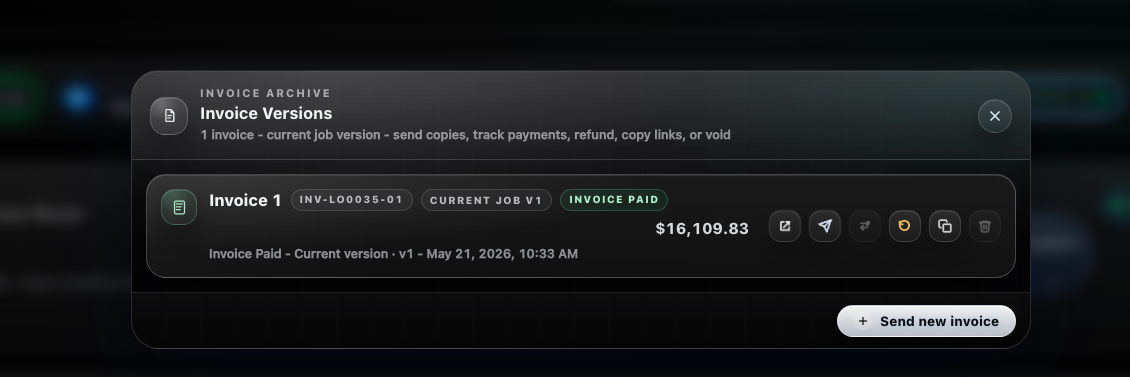
If the field did the work, finance should not need a magnifying glass to get the bill out.
Because BidPointX connects the entire operational flow from the warehouse shelf to the final signature, the invoice is practically built by the time the tools go back in the truck. You can generate a full invoice immediately. If it is a massive, multi-phase project, you can fire off a partial invoice to keep cash flowing smoothly.
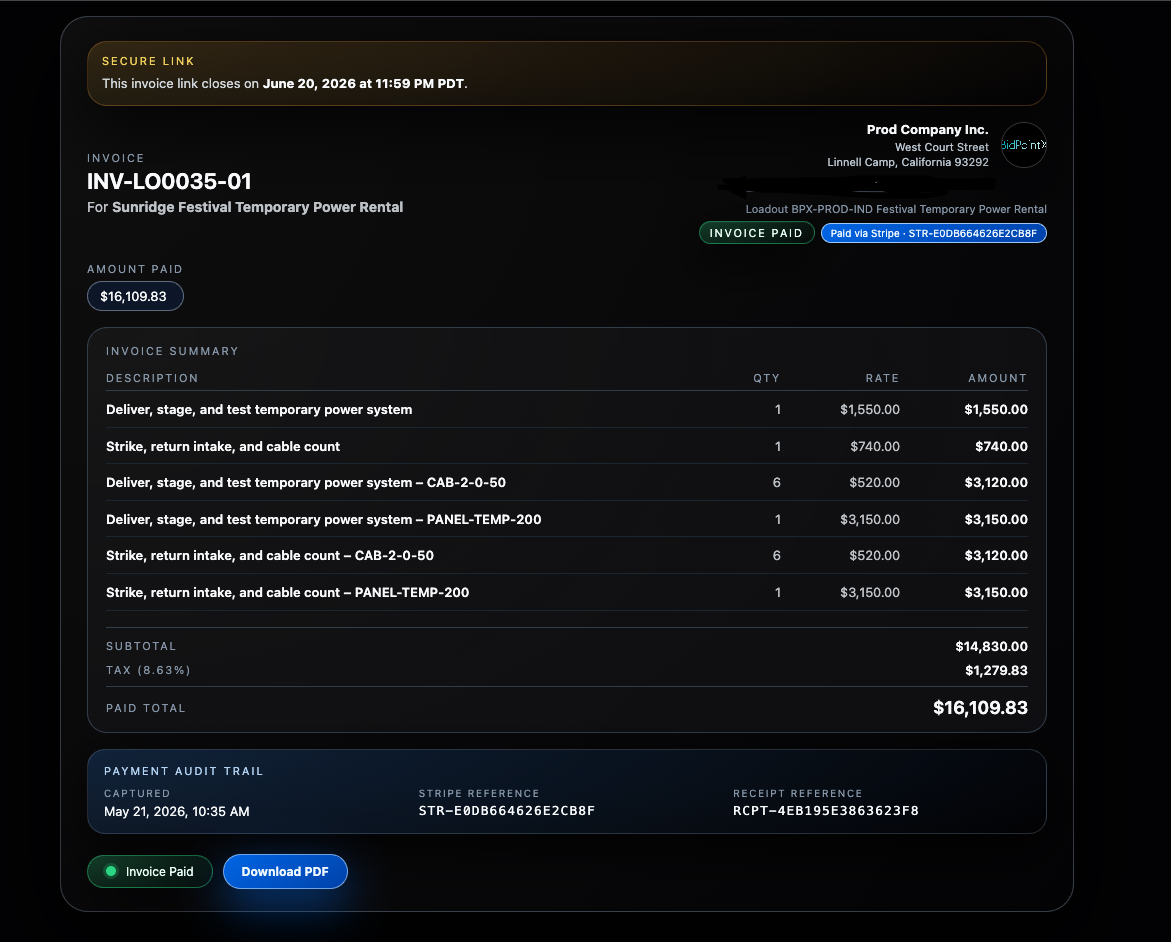
From job creation to final payment.
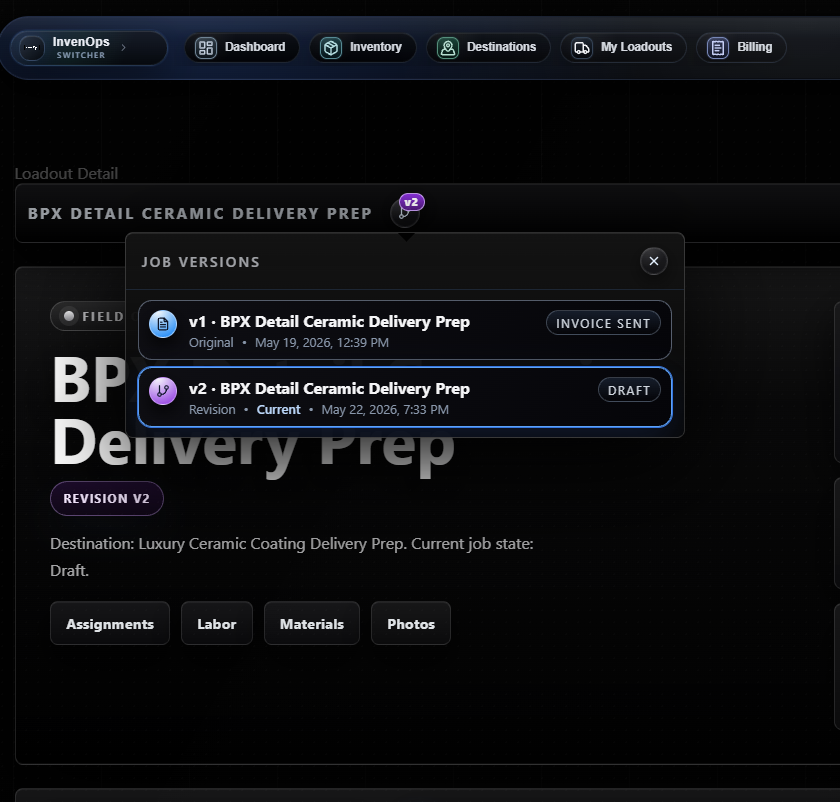
What if the ongoing job changes shape?
Not a problem. BidPointX handles versioning for ongoing jobs, tracking every single revision, addition, and subtraction along the way. Everyone stays on the exact same page, and no one is left wondering why version four of the invoice looks radically different from version two.
The Payoff
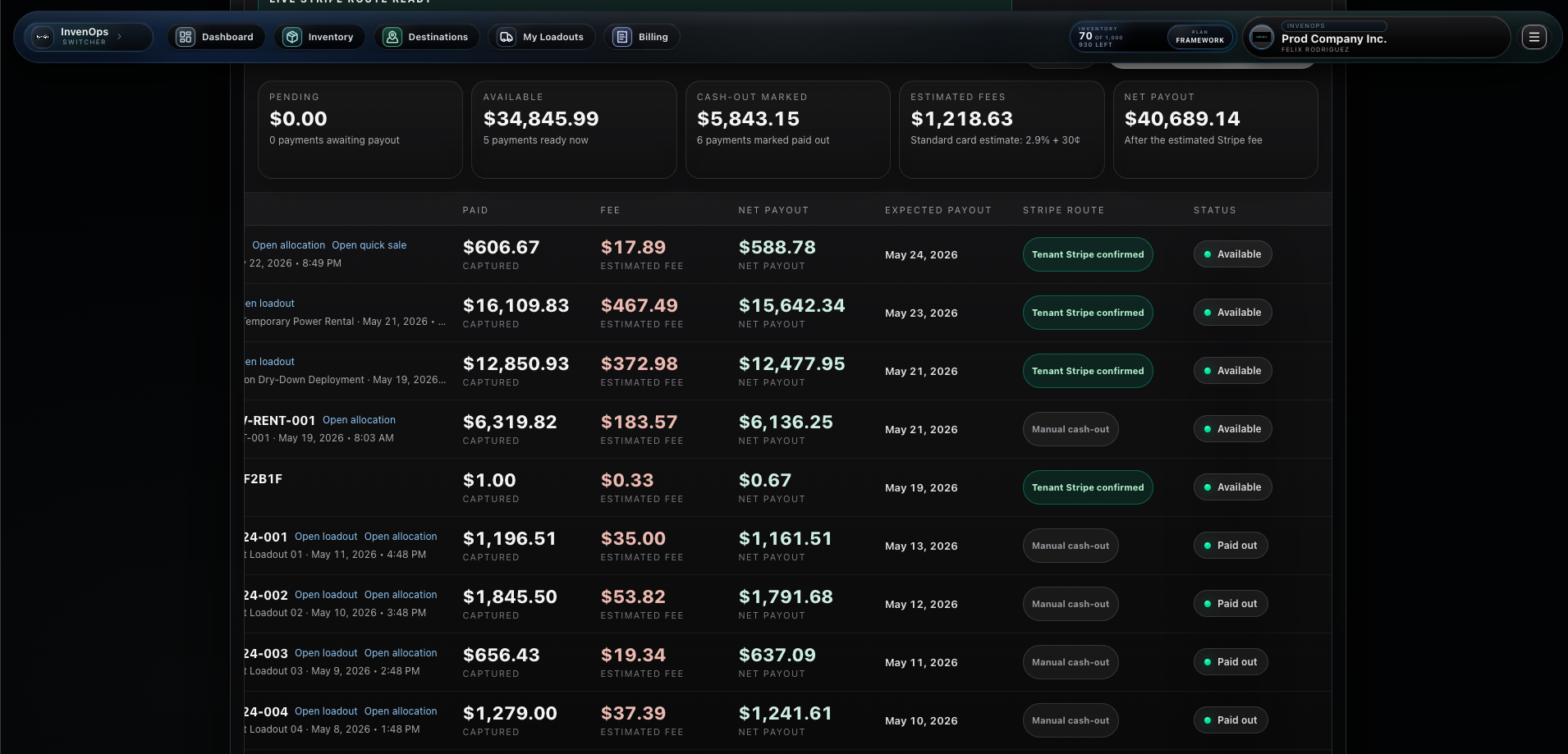
All work is documented, invoiced, and collected. In one place, no more searching the app directory to find the answers.
You do not need more software noise, and you definitely do not need another isolated app that only knows one piece of the puzzle. You need one clean line from the warehouse to the customer's wallet.
Plan it. Load it. Use it. Bill it. Get paid.