
Burn Your Duct-Taped Software Stack: The BidPointX Ecosystem Is Here
The trade and construction industries have been trapped in a bad office sitcom for years.
One tab for quotes. Another for schedules. A spreadsheet named “FINAL_final_REAL_final.xlsx.” A separate place for invoices. A mystery app someone bought in 2019 that only Linda knows how to use.
This is not a tech stack. It is a junk drawer with a login screen.
InvenOps was built for businesses that are tired of hunting for answers across six systems while the crew is already on the road. It brings the moving parts of field operations into one place, so contractors can stop babysitting software and get back to running the company.
Here is what makes InvenOps different from the pile of half-solutions cluttering the market.
1. Inventory is the Anchor, Not an Afterthought
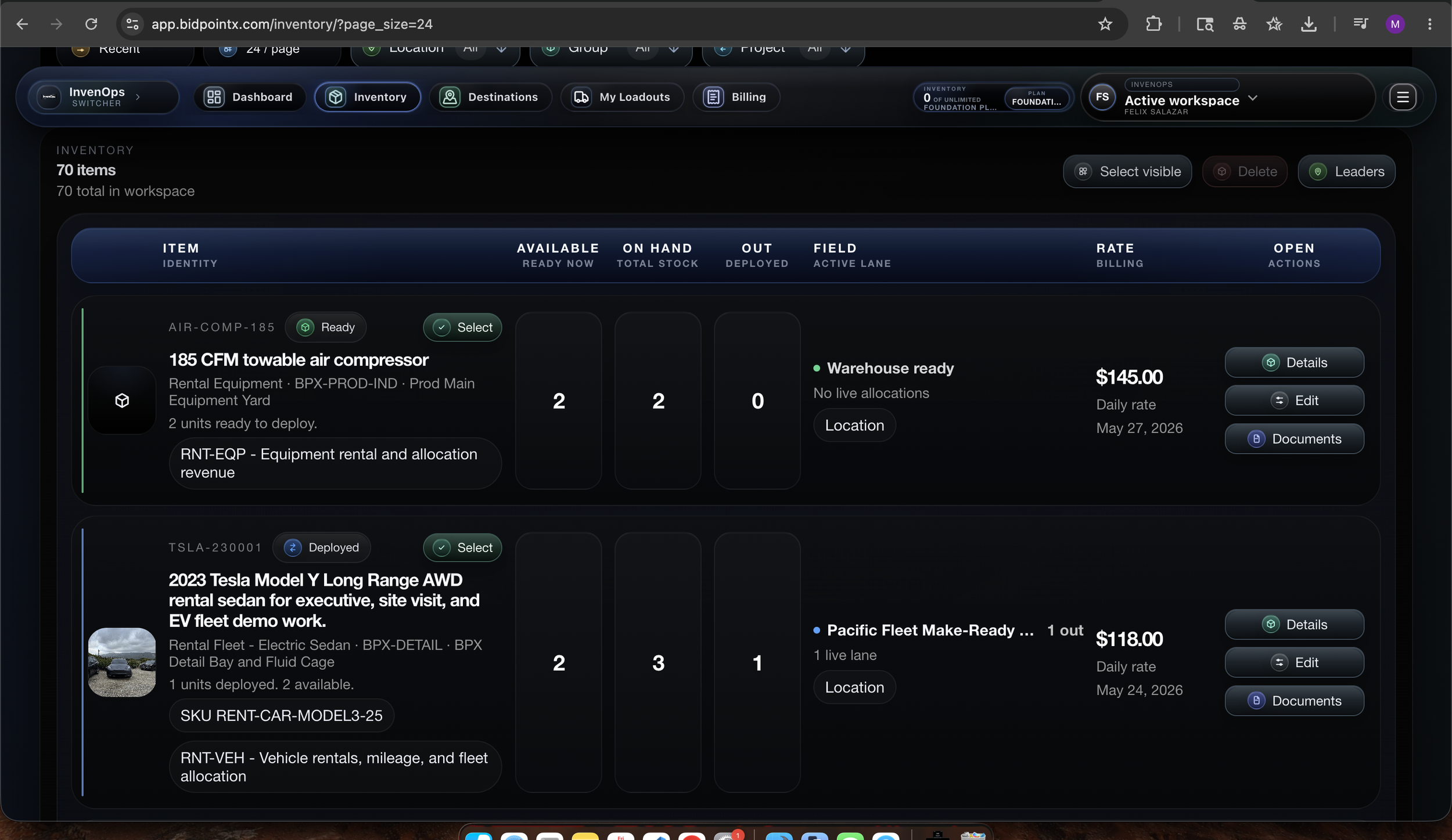
Most operations software treats inventory like the side salad nobody ordered. It is technically there, but no one built the meal around it.
That is a problem, because in the field, inventory is not a side feature. It is the business.
If the right part is not on the right truck, the schedule is fantasy. If a tool disappears into the Bermuda Triangle of job sites, margins take the hit. If nobody knows what is available, what is broken, what is assigned, or what needs attention, the whole operation starts running on guesswork.
InvenOps puts inventory at the center of the business, where it belongs.
That means teams can see what they have, where it is, who has it, and what needs to happen next. Trucks, parts, tools, equipment, consumables, everything gets connected to the work instead of floating around in a spreadsheet like a tiny financial crime scene.
The result is simple: fewer surprises, fewer delays, and fewer “who had the compressor last?” conversations at 6:45 a.m.
2. A Mobile App Built for the Actual Field
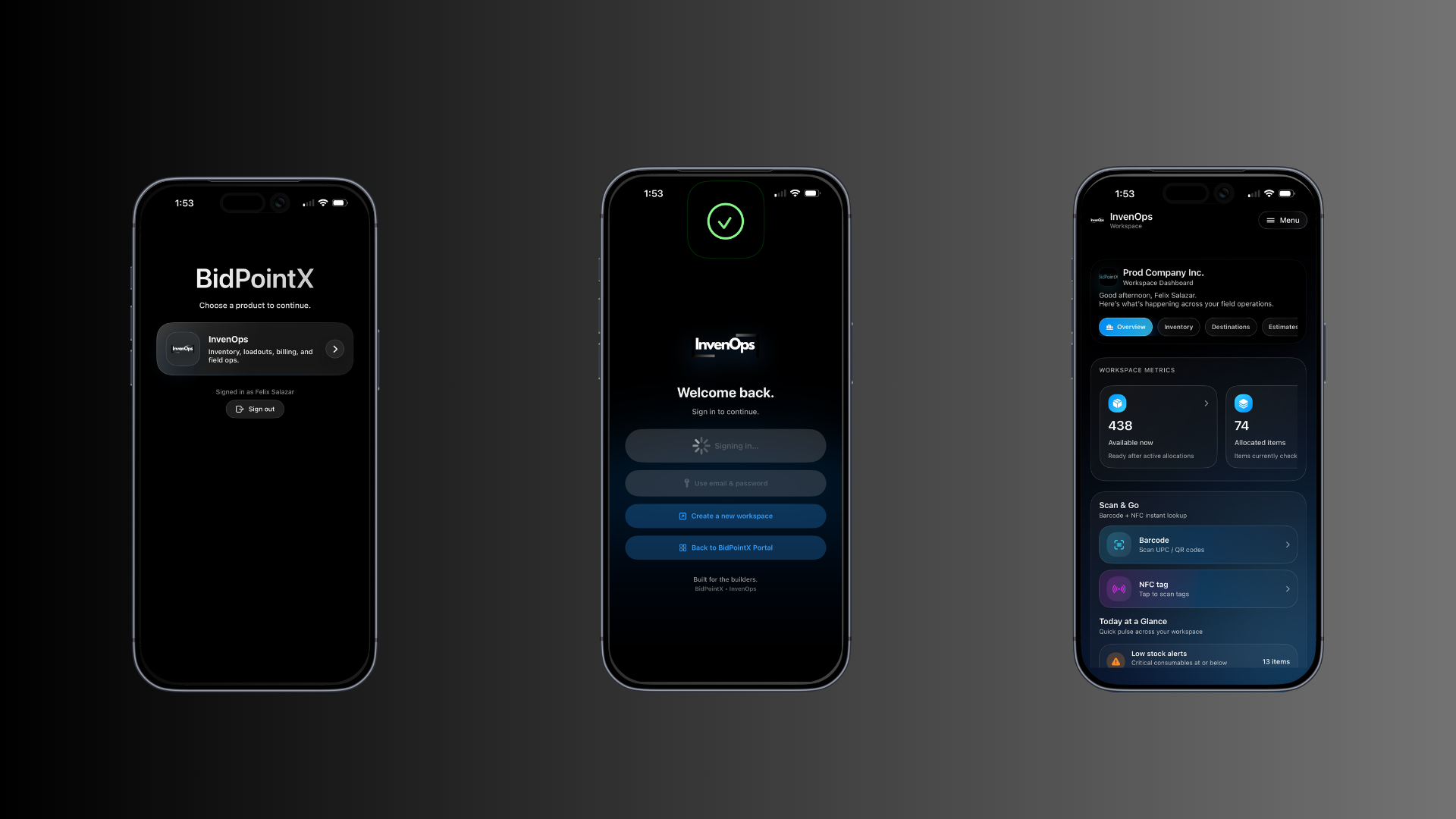
There is office software, and then there is software that survives a job site.
Those are not the same thing.
Field crews do not work in quiet rooms with perfect Wi-Fi, ergonomic chairs, and a motivational poster about teamwork. They work in basements, warehouses, rooftops, back lots, half-built structures, and places where cell service goes to retire.
InvenOps is built for that reality.
Crews can update work, move items, check details, and keep the day moving without turning every bad signal bar into a productivity crisis. The mobile experience is designed around how field teams actually operate, not how someone imagines they operate from a conference room.
It keeps the office connected without forcing technicians to become part-time data clerks. Less chasing. Less calling. Less “Did you update the thing?” More actual work is getting done.
3. The Fluid Flow of Allocations and Loadouts
In too many companies, getting materials from the warehouse to the job feels like planning a small military operation with sticky notes.
What is going out? Who needs it? Which job is it for? Is it coming back? Did it already leave? Did someone write it down? Did they write it down somewhere useful?
InvenOps turns that scramble into a clear flow.
Teams can plan what needs to go where, assign materials to jobs, organize loadouts, schedule the work, and see what is happening as it happens. The office gets visibility without hovering over the field. The field gets clarity without getting buried in admin.
Loadouts become more than a checklist. They become the bridge between planning and execution.
That matters because field operations are won or lost in the handoff. A perfect quote means nothing if the crew shows up missing the one thing they needed. InvenOps helps make sure the plan that looked good in the office still works when the truck doors open.
4. Built-In Stripe Workflows Across the Board
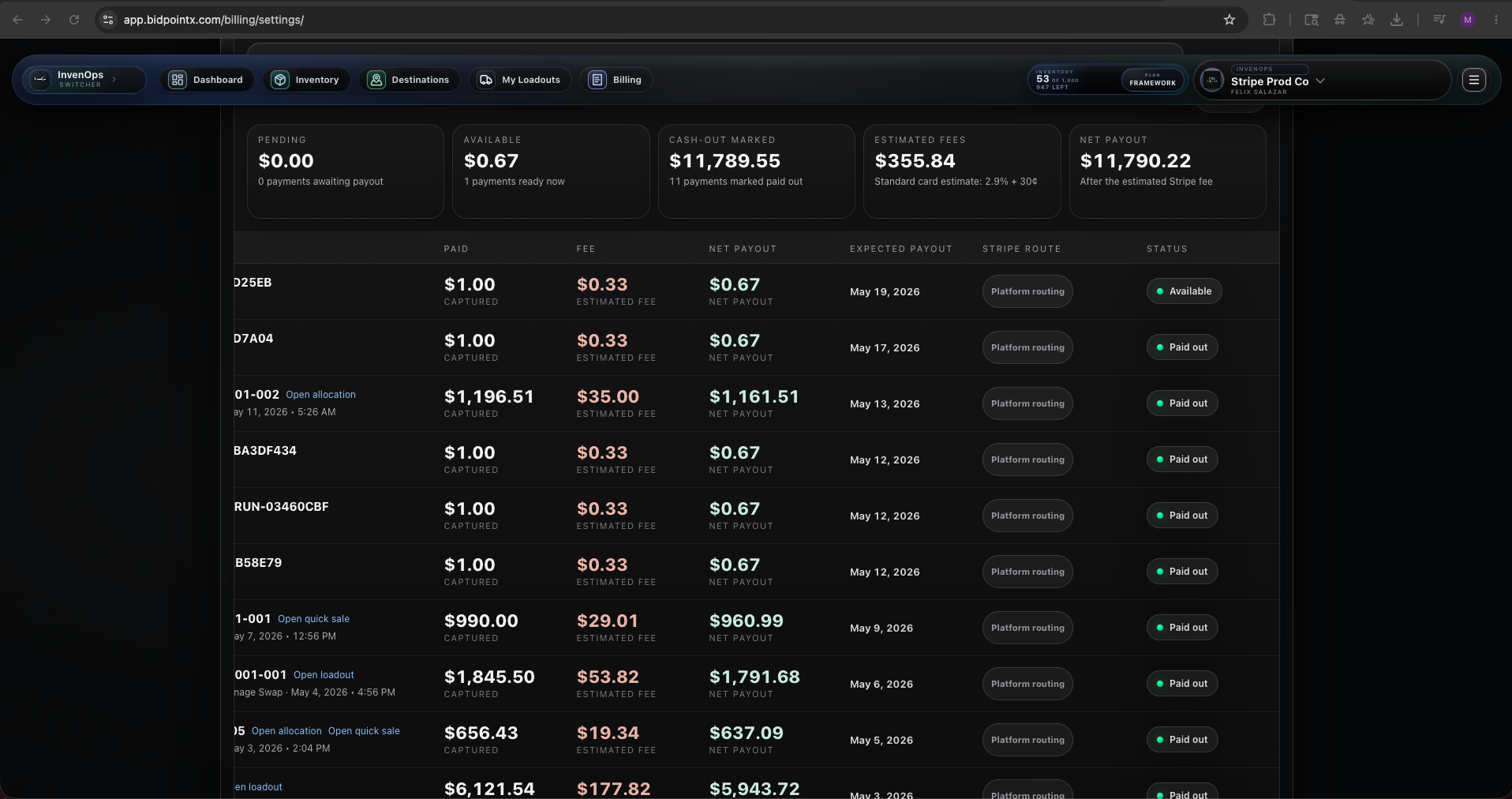
Doing the work is hard enough. Getting paid should not require a scavenger hunt through three platforms and a prayer.
InvenOps connects the money side of the business directly to the work itself. Estimates, approvals, invoices, and payments all stay close to the job, instead of wandering off into disconnected systems.
Customers can review and approve work without friction. Teams can send invoices without rebuilding the same information somewhere else. Payment status becomes visible instead of mysterious.
That means fewer awkward follow-ups, fewer loose ends, and less time between “job complete” and “money in the bank.”
For contractors, cash flow is not a finance department buzzword. It is payroll, fuel, materials, growth, and sleep. InvenOps treats it accordingly.
5. Deeper Operational Finance
A business can look busy and still be bleeding money.
That is the uncomfortable truth behind a lot of field service operations. The schedule is full, the phones are ringing, the crews are moving, and yet somehow the margins look like they fell down a flight of stairs.
InvenOps helps owners and managers see what is really happening beneath the surface.
Which jobs are profitable? Which types of work quietly eat up labor? Where are costs drifting? Where is the company winning, and where is it just staying busy?
Instead of waiting until the end of the month to discover the damage, teams can connect operational activity to financial performance along the way.
That turns daily field data into business insight. Not a prettier report. Not another dashboard no one opens. Actual visibility into where the money is made, where it leaks, and what needs to change.
Your Fragmented Tech Stack is Dead.
The market does not need another tiny tool that solves one problem while creating three more logins.
It needs consolidation.
InvenOps brings inventory, field execution, loadouts, scheduling, payments, and operational finance into one connected system built for the real world of trades and construction.
No more spreadsheet archaeology. No more tab-hopping Olympics. No more running the business from five disconnected systems and calling it “process.”
We are not here to help companies manage the mess better.
We are here to replace the mess.