
How veterinary clinics, groomers, and pet-service businesses can use InterFace to spend less time chasing information and more time doing the work.
His name is still Cooper. He’s still a Labrador. He still doesn’t like having his nails trimmed.
And his owner is typing all of it into another form.
The vet has one profile. The groomer has another. The boarding business needs the vaccination information again. Someone’s partner made the appointment, someone else is dropping him off, and the feeding instructions are in a text message on a phone that isn’t currently in the building.
Cooper has contributed nothing to resolving any of this.
For the business, though, somebody has to. Somebody has to collect the information, find the missing attachment, confirm the appointment, and make sure the person actually handling Cooper knows what they need to know.
InterFace by BidPointX brings pet profiles, bookings, forms, documents, and client conversations into the same platform. Its pet-service features include owner-controlled information sharing, appointments linked to specific pets, and portal templates for veterinary care, grooming, boarding, training, and sitting or walking businesses.
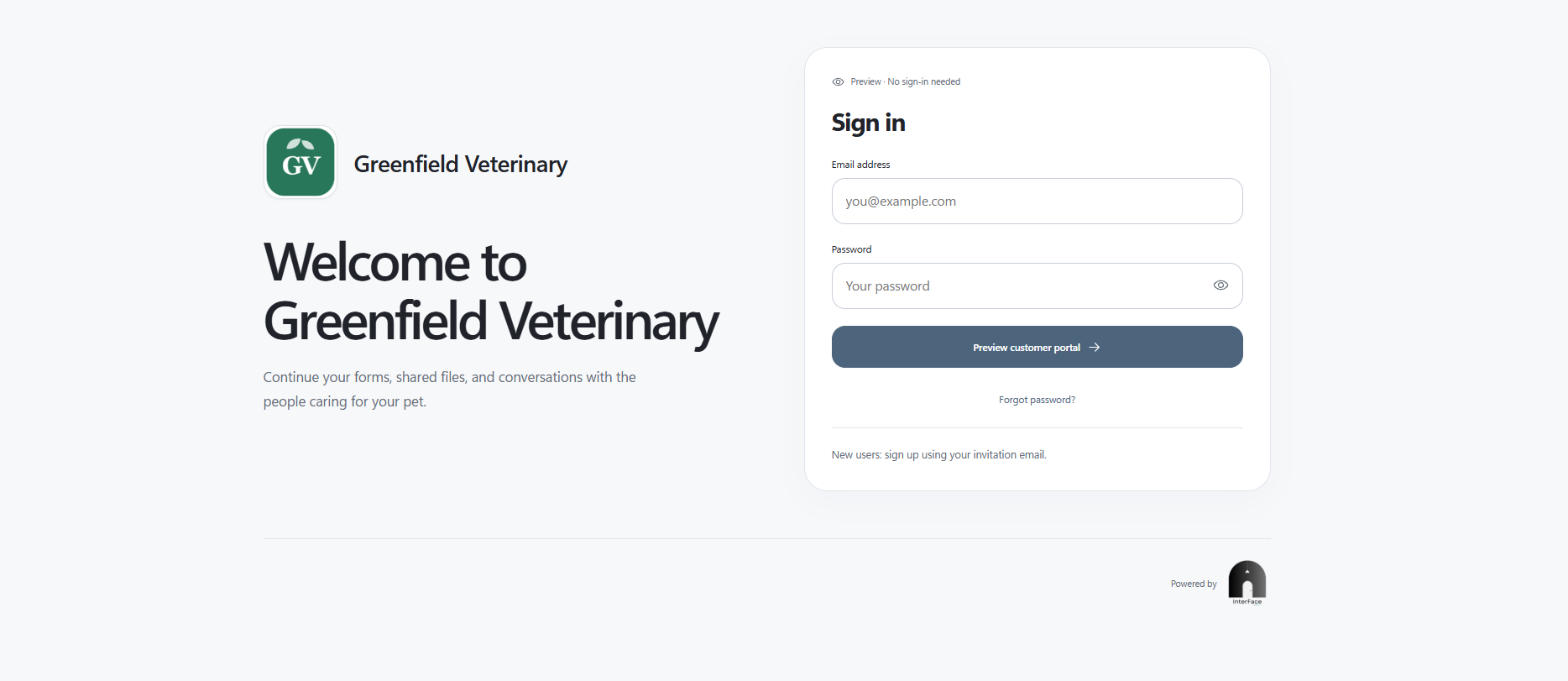
Give clients somewhere to start that isn’t another email.
A pet profile that doesn’t start over at every business
A customer’s name and phone number tell you who’s paying. They don’t tell you much about the animal coming through the door.
InterFace gives the pet its own profile. Alongside basic details like name, species, breed, birth date, and weight, it supports photos, allergies, medications, vaccination entries, behavior notes, feeding instructions, grooming preferences, and veterinary or emergency contacts.
That creates some very practical possibilities.
A groomer could review an owner’s handling notes before an appointment. A boarding business could check the feeding instructions without asking someone to forward a screenshot. A veterinary practice could collect background information before a routine visit rather than starting that conversation at the counter.
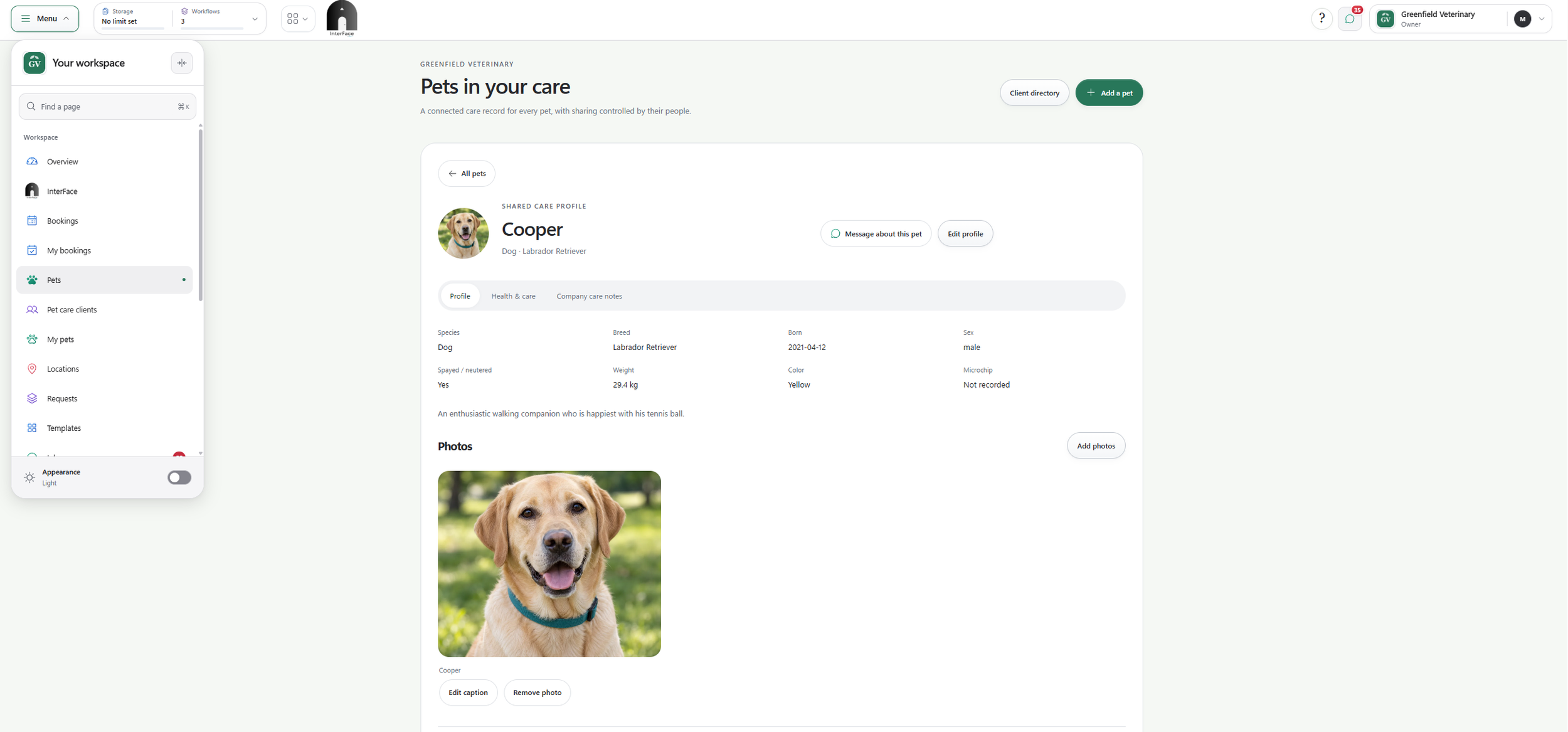
Same dog. Less repeated information.
The more interesting part is that the profile belongs to the customer’s account, rather than being trapped inside one business’s customer list. The owner can share that same profile with other participating businesses using InterFace. They decide which companies receive basic viewing access, whether to share the broader care information, and whether a company can edit the profile. Sharing isn’t automatic.
So Cooper’s owner doesn’t have to recreate Cooper every time they try a new service.
They can maintain his profile, share it deliberately, and get on with the appointment.
Book the pet, not just the person holding the leash
An appointment under “Sarah” is useful until Sarah has three dogs.
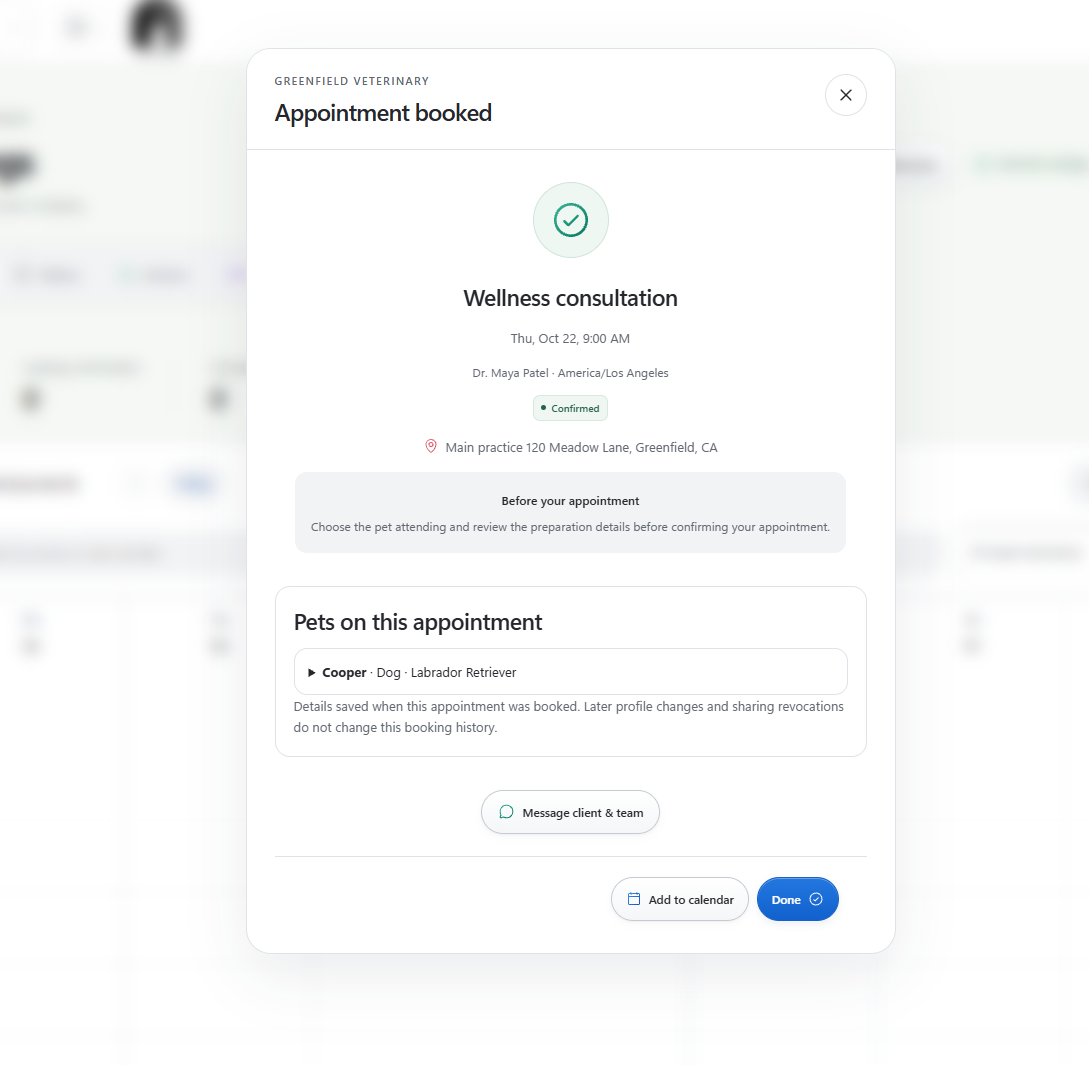
InterFace can connect a booking to the actual pets attending. Businesses can configure a service to require a pet and specify which species it accepts. Account customers can select their saved pets, with explicit sharing when connecting them to a new business. For businesses that enable guest booking, customers can enter basic pet details without creating a saved account profile.
That means a grooming or veterinarian appointment can tell the team which dog is coming, not just which human clicked the button.
The scheduling tools also let businesses set service durations, prices, staff availability, locations, and time before or after appointments. Recurring appointments are supported, along with a staff-managed waitlist. Public and guest booking are optional settings, so the business decides how open it wants its calendar to be.
Alex booked it. Cooper’s the one coming in.
For a groomer, those gaps between appointments could provide time to clean and get ready for the next animal. For a trainer, recurring appointments could support a series of private sessions. For a veterinary practice, the public calendar could be limited to the routine services the practice chooses to offer.
You still decide what belongs on the schedule.
The software doesn’t get to decide that a fifteen-minute slot is enough for a dog with strong opinions about the dryer.
Stop making the front desk remember everything
Consider a boarding intake.
The owner needs to provide stay details, feeding instructions, emergency contacts, and whatever supporting documents the business requires. Your team needs to review that information and follow up on anything missing.
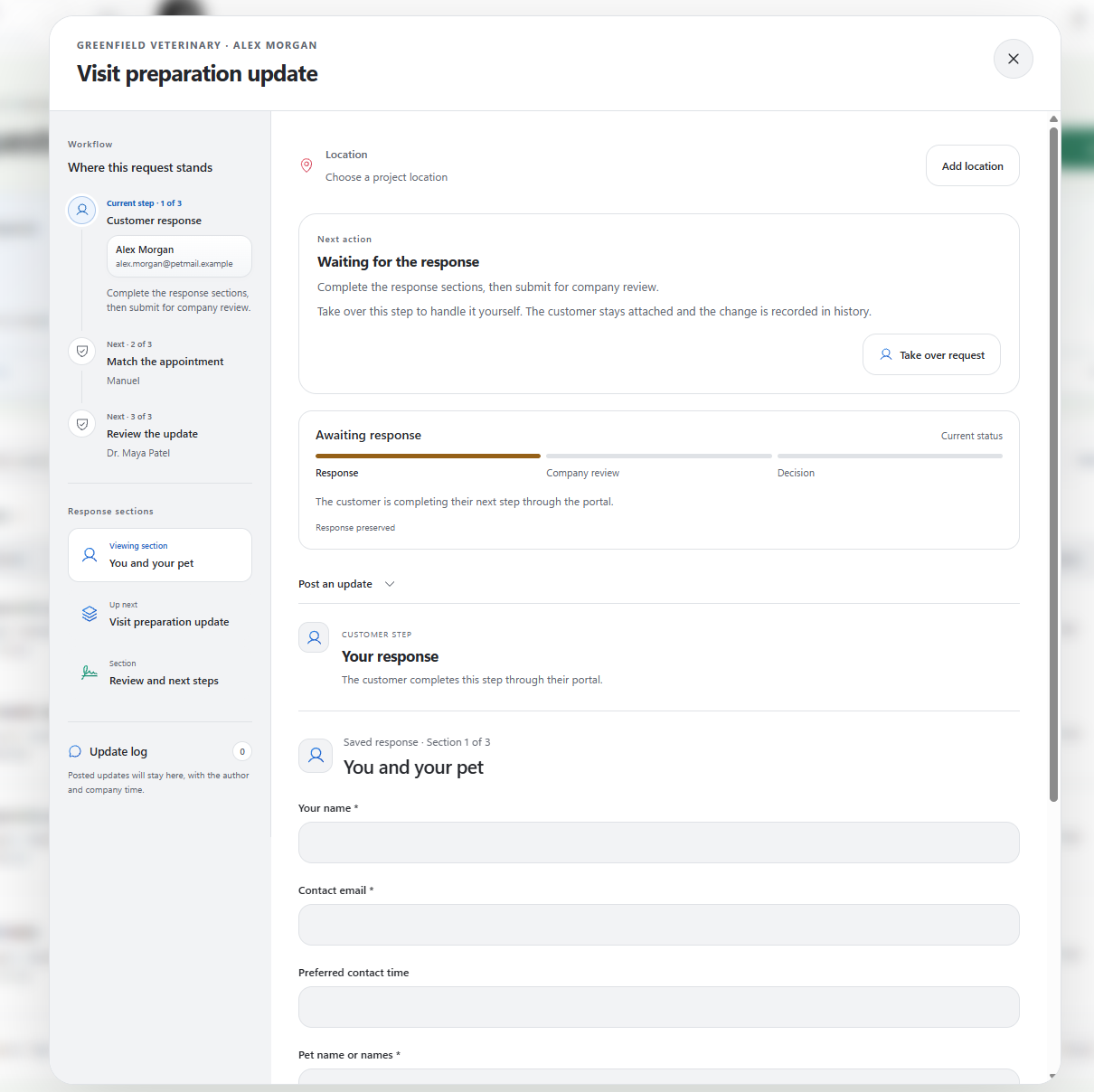
With InterFace, a business can build that into a reusable form and route the submission to the appropriate reviewer. Requests have visible stages for the customer’s response, company review, and decision. Reviewers can request changes, and customers can see the status and history of their submission.
Clients can see where their paperwork stands. Your team doesn’t have to narrate it.
That gives the team a place to check what has actually been submitted instead of relying on whoever remembers the last phone call.
It also gives the customer somewhere to look before calling to ask whether the paperwork arrived.
The distinction matters: submitting an intake form isn’t the same thing as reserving an appointment. InterFace keeps those functions separate. Forms gather information and send it for review; bookings control appointment availability.
A completed form shouldn’t accidentally promise a customer a time nobody agreed to.
Keep the conversation attached to what you’re talking about
A message saying “Can you send that again?” is not especially helpful when nobody remembers what “that” was.
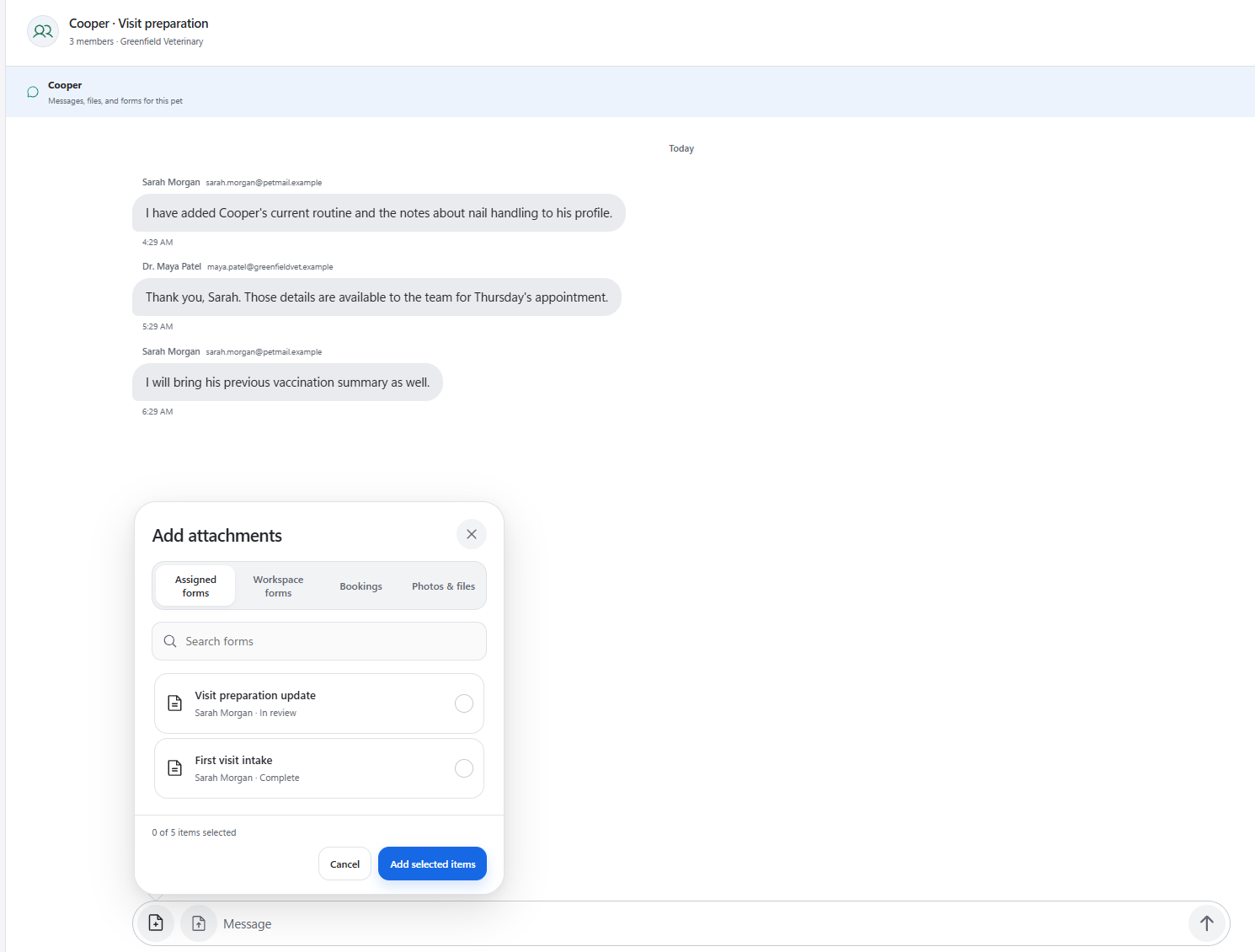
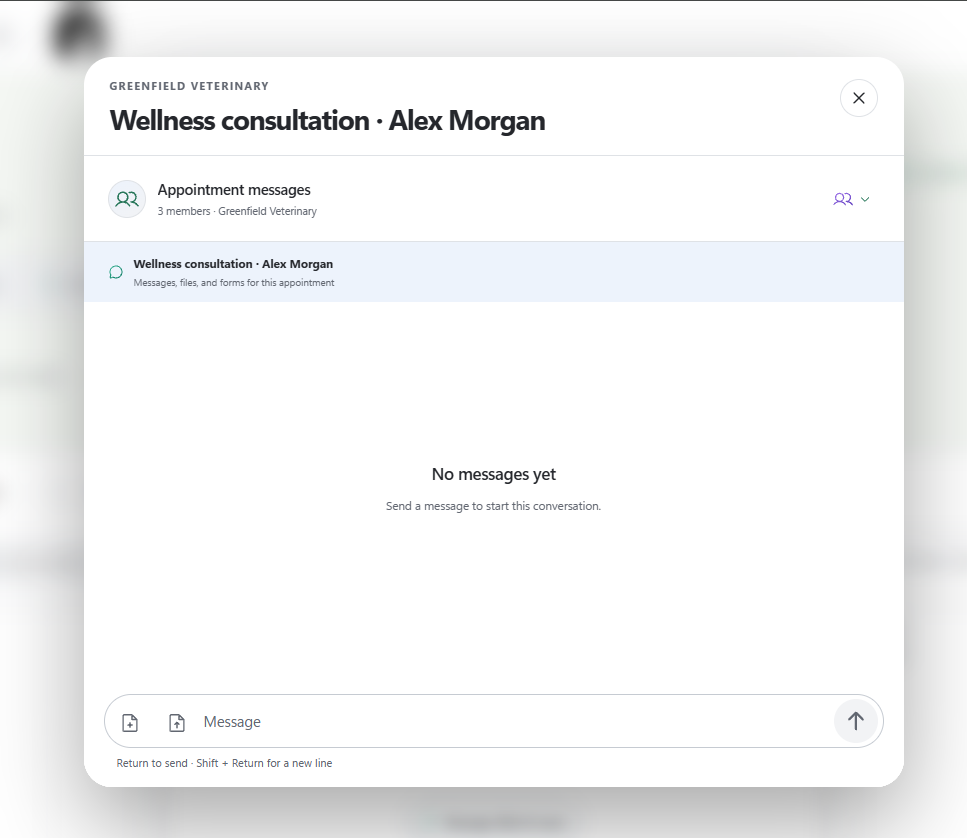
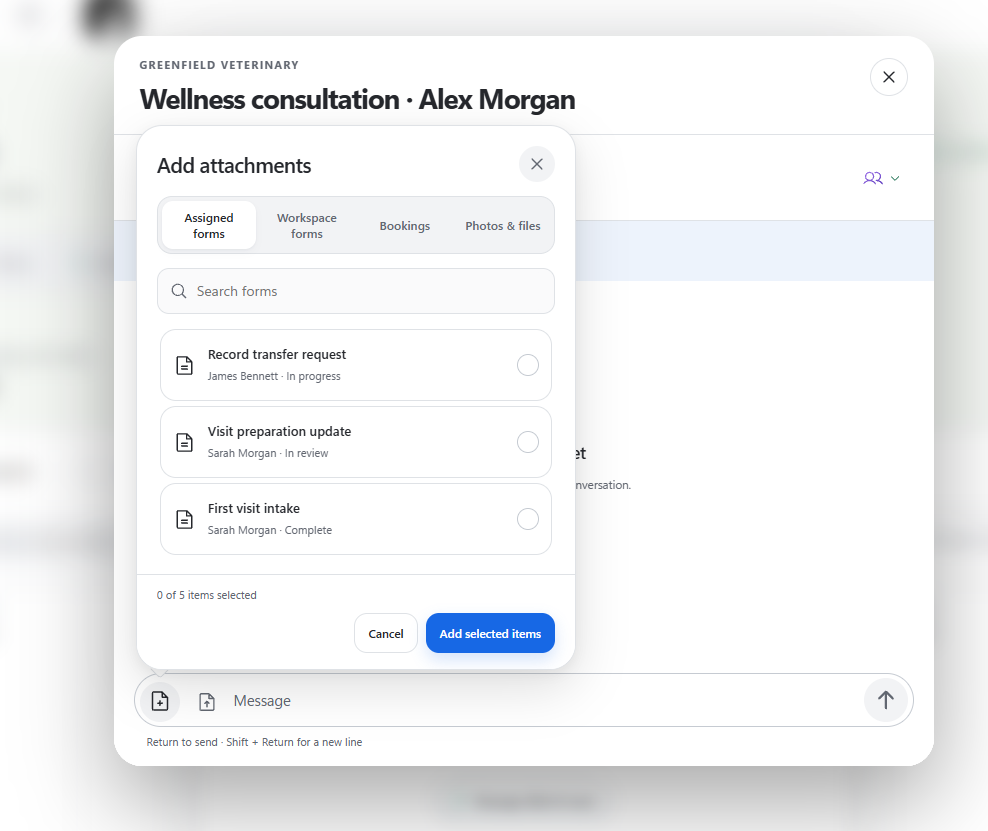
InterFace supports conversations connected to a booking, a pet, or a client. Authorized participants can exchange messages and attach files, while forms can be shared through the existing request workflow. Access is checked against the relevant company, conversation, and pet-sharing permissions.
For a groomer, that could mean discussing a requested cut in the pet’s conversation rather than digging through an unrelated inbox. For a trainer, it could mean keeping session questions and supporting files together.
For a veterinary office, it could mean handling routine administrative questions and document requests in a conversation with the right context.
Not every update needs to become a phone call. Not every attachment needs to begin a new email thread. And not every employee should have to reconstruct the relationship from the subject line “Re: Re: Question.”
The owner can share information without sharing everything everywhere
Pet care can involve more than one person and more than one business. That doesn’t mean everyone should have unrestricted access to the same records.
InterFace supports multiple owners and caregivers on a pet profile. Invitations require acceptance by the intended verified account. Owners control company sharing, while caregivers can book pets that have already been shared with the business. Each company also has its own private care notes, separate from the shared profile.
That’s useful for a household where one person books, another handles drop-off, and both need access without having to pass around a password.
It’s useful for the business, too. Internal observations can stay with that company rather than following the pet into every other provider’s workspace.
Bookings also preserve a snapshot of the pet details shared when the appointment was created. Later profile edits don’t silently rewrite the historical booking. Removing a company’s access stops access to the live profile, while existing booking snapshots remain historical records.
The point is to make information easier to use without pretending that “connected” should mean “visible to absolutely everybody.”
Start with your kind of business
A solo dog groomer should not have to spend a weekend designing a client portal from an empty screen.
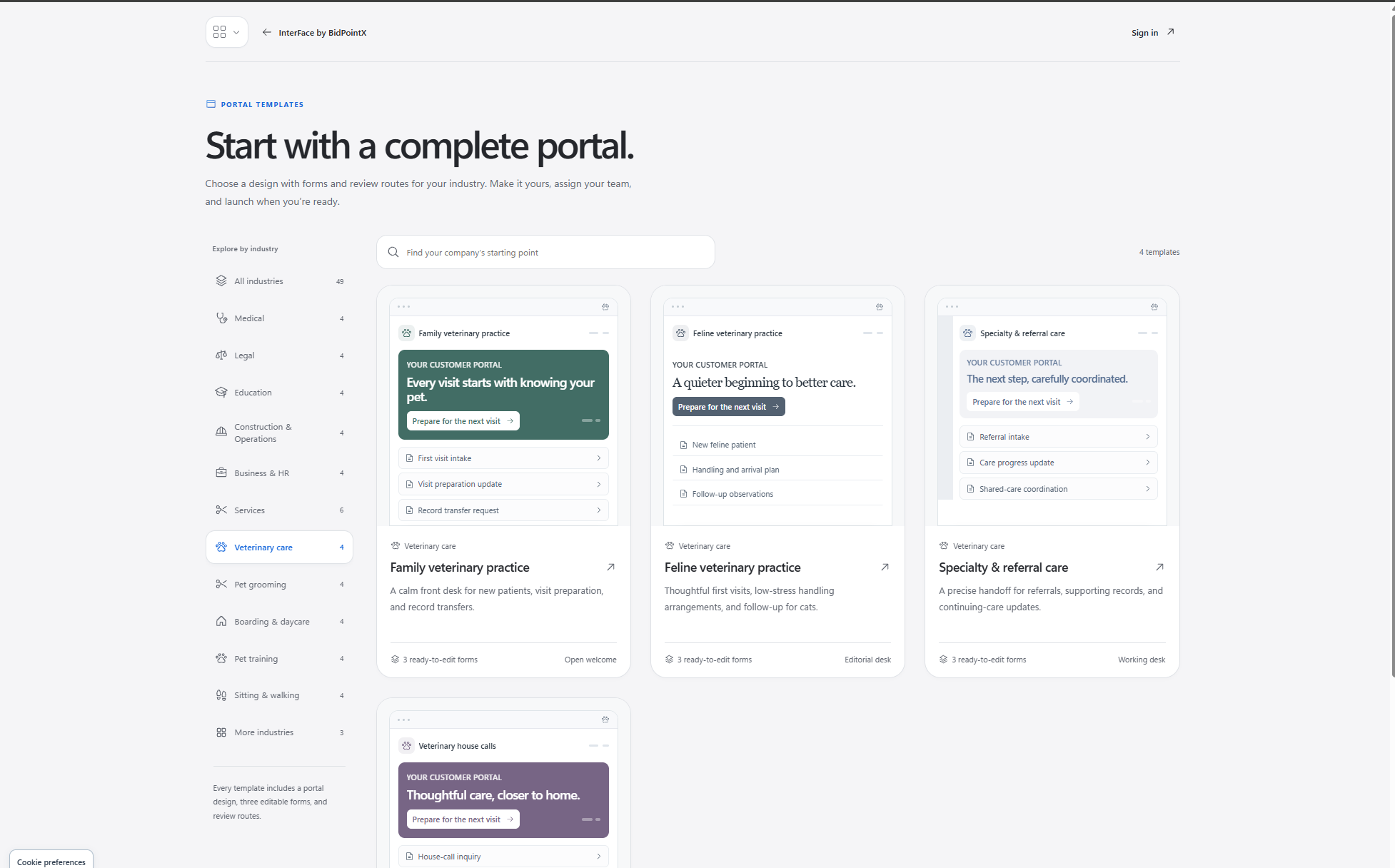
InterFace includes pet-industry starting points for veterinary practices, grooming businesses, boarding and daycare, training, and sitting or walking services. These include variations such as mobile grooming, feline practices, house-call veterinary services, puppy training, and multi-pet household care. Each contains editable forms and review routes.
Start with your business. Not a blank page.
The business can apply its name and logo, adjust the questions and customer-facing wording, assign the people responsible for reviews, and check the result before publishing. A small business can assign several review responsibilities to one person. The templates are starting points, not a requirement to invent extra departments.
For a veterinary practice, the opportunity is the client-facing work around an appointment: gathering information, receiving documents, handling routine requests, and keeping communication organized. That is a different job from diagnosis, prescribing, or maintaining a complete clinical record.
For a groomer, it’s connecting the booking to the pet, keeping preferences and handling notes accessible, and giving clients a consistent place to communicate.
For a boarding, training, sitting, or walking business, it’s making sure the details needed for the service aren’t scattered across whichever channels the customer happened to use.
Start with the part of your day that creates the most unnecessary chasing. Build around that.
Give the humans less to do
The benefit isn’t that your business now has another piece of software.
It’s that your receptionist has somewhere to check whether the intake is complete. Your groomer can see which pet is booked. Your client can share a maintained profile instead of repeatedly rebuilding it. Your team can find the conversation without asking who last spoke to the owner.
That’s the work InterFace is designed to support. You still have to handle the anxious cat, the overexcited puppy, and the owner who considers arriving twenty minutes late a minor scheduling preference.
But finding the feeding instructions shouldn’t be the difficult part.
Cooper is already enough work.